Discover why moving beyond the scale to a body composition scan is the key to achieving your most accurate health and fitness goals.

6 minutes
For years, the bathroom scale has been the primary judge of health and fitness journeys, often leading to frustration when body weight rises, falls or fails to move despite exercise and nutritional efforts. Unfortunately, this single number provides little to no insight into the proportions of fat mass versus essential lean mass, offering an incomplete and often misleading measure of overall health and wellness.
The modern approach has decisively shifted focus to body composition testing, which analyzes the crucial inner components of your body. This guide will explore the technologies, benefits, and how to apply the data from a body composition scan to drive better, more accurate health and fitness results.
A body composition scan is a comprehensive testing method used to determine the exact components of your body.
Unlike a simple scale, which only measures overall mass, a scan breaks down your weight into separate categories. The core analysis relies on the three-component model, which measures body fat, lean mass (including water and muscle mass), and bone mineral density.
Understanding these proportions is crucial for setting effective fitness and health goals.
The Body Mass Index (BMI) is a simple measure of mass based on your height and weight. However, it fails to account for the crucial differences in body composition between individuals.
For example, a highly muscular athlete may be labeled as overweight or obese by the BMI scale because it does not differentiate between muscle mass and body fat. A comprehensive body composition scan, however, provides the key measurements of body fat percentage, muscle mass, and bone density, offering a far more accurate health profile.
A body composition scan is highly valuable because it provides a precise baseline for personalized nutrition and training plans. Tracking changes in your body's makeup allows for early detection of conditions like sarcopenia (low muscle mass) or high visceral fat, which is linked to obesity-related issues.
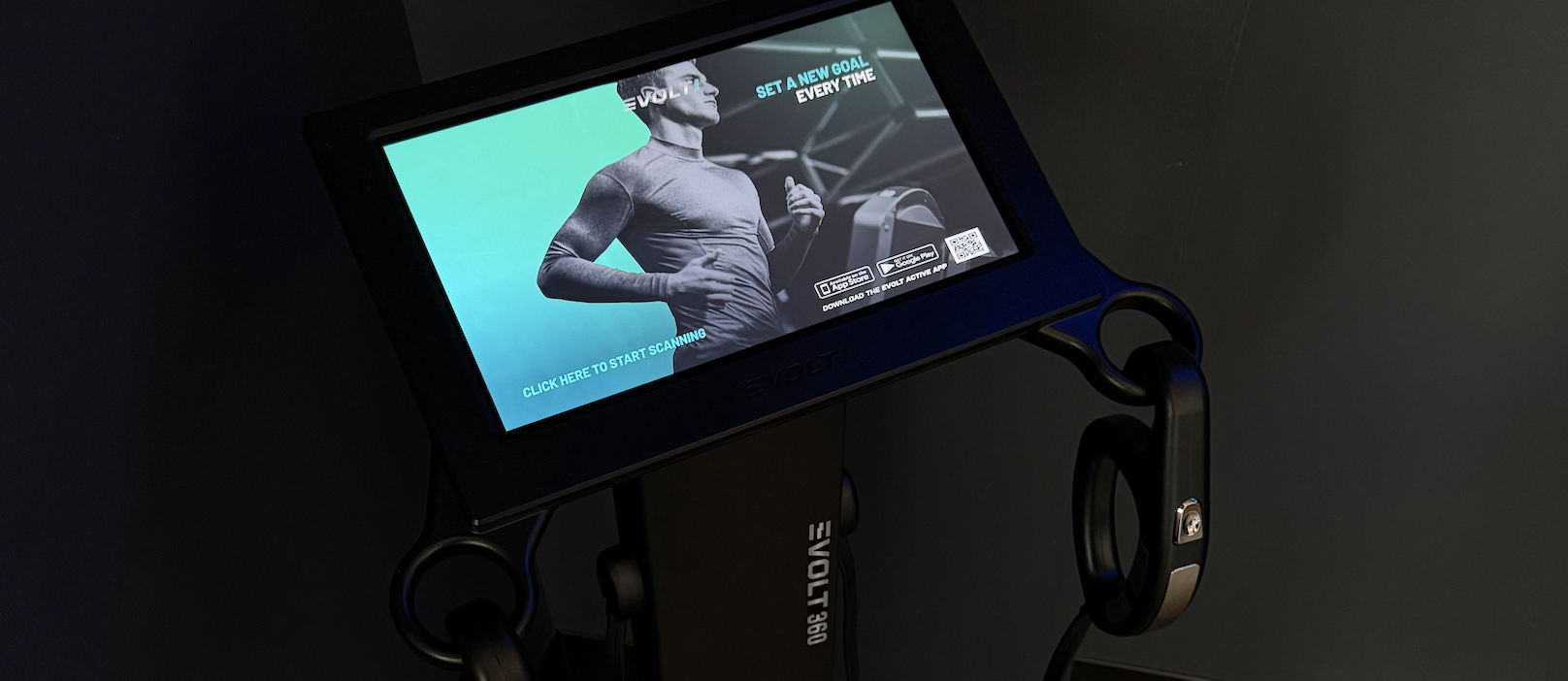
Most Basecamp Fitness studios utilize the Evolt 360 body composition scanner, which uses Bioelectrical Impedance Analysis (BIA) technology to give you a deeper, more accurate read on what’s happening inside your body. These specialized body measurements are critical steps in proactive health management.
Everyone can benefit from a body composition scan, regardless of their current fitness level or health goals. Whether the primary goal is losing body fat, building lean muscle, or improving athletic performance, the data is essential.
Furthermore, the scan supports individuals using GLP-1 medications by monitoring muscle mass and metabolism, and it is crucial for improving long-term health by providing metrics on visceral fat and bone density. The scan provides the objective testing data needed to make informed decisions for anybody.
To ensure the most consistent and repeatable results from your body composition scan, specific preparation guidelines must be followed.
A few different technologies dominate the field of body composition analysis, each providing varying levels of detail, accuracy, and accessibility. Choosing the right testing method depends on your budget, your health goals, and the specific metrics you need to track.
The Dual-Energy X-ray Absorptiometry (DXA) scan is widely regarded as the gold standard for measuring body composition due to its high accuracy. This advanced imaging technology uses two distinct X-ray energies to differentiate between bone mineral, lean mass, and fat mass. The sophisticated composition scan provides a wealth of data, including Total Body Fat Percentage, Regional Fat Distribution, Skeletal Muscle Mass, Visceral Adipose Tissue (VAT), and a detailed look at Bone Density.
Bioelectrical Impedance Analysis (BIA) is a faster and more accessible testing method that measures body composition by sending a low electrical current through the body. The current moves easily through water-rich lean mass and is impeded by fat, allowing the device to estimate water content and overall composition. Advanced multi-frequency or segmental BIA devices, such as the EVOLT body composition scan, offer higher accuracy than simple home scales by measuring impedance in different body segments.
A body composition scan provides far more valuable insight than a traditional scale. Below are the key health metrics the Evolt 360 Body Composition Scanner measures and why each one matters for fat loss, muscle gain, and overall metabolic health.
This is your total weight in pounds or kilograms. While it is the number most people focus on, body weight alone is not a reliable indicator of progress. Weight can fluctuate based on hydration, body type, ethnicity, training style, and even time of day. Because it does not distinguish between muscle, fat, or water, using scale weight as your only measurement often gives a misleading picture of your health.
Lean Body Mass includes muscle, protein, and minerals—essentially everything except body fat. Increasing lean mass helps your body use more fuel efficiently and maintain a healthier overall composition. Higher LBM is directly linked to a stronger metabolism, better fat-burning capacity, improved strength and performance, and better long-term health and longevity. This is one of the most important metrics for tracking true fitness progress.
Skeletal muscle mass refers to the muscles attached to your bones—the muscles you use during all HIIT workouts and strength training sessions. Because muscle is metabolically active, building skeletal muscle is one of the fastest ways to boost metabolism and support sustainable fat loss. More skeletal muscle means a higher Basal Metabolic Rate (BMR), better calorie burn at rest and during workouts, higher strength levels, faster recovery, and better hormone production and cell rejuvenation.
Total Fat Mass is your overall body fat measured in pounds or kilograms. This number includes subcutaneous fat (fat under the skin) and visceral fat (internal fat around the organs). Your Total Fat Mass is calculated by subtracting your Lean Body Mass from your Total Body Weight. This metric provides a clearer picture of your body composition and is crucial for tracking fat loss progress during your fitness journey.
Visceral fat is the deep, intra-abdominal fat that surrounds your internal organs. You cannot see it, but it significantly impacts your health. High visceral fat levels are associated with insulin resistance, glucose intolerance, increased inflammation, and a higher risk of type 2 diabetes. Reducing visceral fat is one of the most important steps you can take for long-term metabolic health, disease prevention, and improved longevity.
The Bio Wellness Index (BWI) is one of the most valuable metrics on your Evolt scan. Unlike BMI, which only looks at height and weight. BWI evaluates the relationship between lean body mass and fat mass to give a more accurate assessment of your overall health. A higher BWI indicates a healthier balance of lean mass to fat mass and is strongly associated with improved longevity, athletic performance, and metabolic function. BWI is scored on a scale:
Your Bio Age reflects your internal health based on muscle mass, fat mass, and overall body composition, compared to your actual chronological age. If your Bio Age is younger than your real age, your body is functioning at a higher level than average. If your Bio Age is higher, it is a sign that improving muscle mass, protein intake, and reducing overall body fat can help optimize your health. Bio Age is a powerful indicator of how lifestyle, training, and nutrition are affecting your long-term well-being.
It is important to remember that targets for metrics like Lean Body Mass, Skeletal Muscle Mass, Total Fat Mass, and Total Body Weight are highly individualized. Healthy ranges will vary significantly based on factors such as gender, age, height, and ethnicity. Always compare your results against previous scans and consult with a professional to understand what your optimal targets should be.
Beyond simply providing metrics, the data from a body composition scan offers highly specific, actionable insights that directly influence how you approach health, fitness, and long-term wellness.
By moving past generalized averages, these scans empower you to monitor distinct progress in fat loss, optimize muscle gains from strength training, and proactively manage critical health markers associated with aging and metabolic risk.
The precision of a body composition assessment allows you to monitor the loss of fat mass while ensuring the retention or gain of beneficial lean mass.
This is vital for accurate Fat Loss Tracking: if you are losing fat but gaining muscle, the scale may not budge but the scan will show the real progress.
Scheduling a follow-up body composition scan after a specific training or diet cycle, typically every 3-6 months, is recommended for tracking significant progress.
Scientific research emphasizes that preserving muscle mass is critical for long-term health and mobility, with studies showing that individuals who maintain a higher skeletal muscle mass to body mass ratio often demonstrate better glucose regulation and functional longevity. For accurate comparison, it is important to standardize your pre-scan conditions, such as ensuring consistent fasting and hydration status before each scan.
Visceral Adipose Tissue (VAT) measurement is a significant feature of body composition testing as it assesses the metabolically active fat surrounding internal organs. Elevated VAT is a key risk factor for cardiovascular and metabolic disease, making its measurement a crucial testing component.
Individuals with a high-risk waist circumference or history of metabolic concerns should use the VAT area and the Android/Gynoid ratio as motivation for lifestyle changes. Extensive research confirms that high VAT levels (e.g., above 100cm^2 for VAT area, a common clinical threshold) are significantly associated with worse health outcomes, and a reduction in VAT, even when total body mass remains stable, has been shown to rapidly improve biomarkers like blood pressure and cholesterol.
Consistent, long-term cardio and increased dietary fiber intake are effective strategies to target the reduction of this specific internal fat, thereby improving metabolic function and health outcomes.
The measurements of Bone Mineral Content (BMC) and Skeletal Muscle Mass (SMM) are essential metrics for overall wellness and longevity.
Tracking these two metrics through a body composition scan allows you to monitor and improve the resilience of your body. This supports strength training results, where the Evolt highlights which muscle groups are growing and which need more training, helping you optimize your workouts. Older adults, post-menopausal women, and those concerned about osteoporosis should focus on integrating compound resistance training 2-3 times per week to build muscle mass and stress the bone. This is critical for Menopause & Aging Support: As women age, muscle and bone mass naturally decline, and regular scans help track these changes and guide strength/nutrition strategies to support longevity.
Research consistently shows that maintaining high Skeletal Muscle Mass and improving Bone Mineral Content are fundamental for fracture prevention and preserving mobility well into later life.
Furthermore, for those requiring GLP-1 Weight Loss Support, monitoring muscle mass, protein intake, and metabolic rate is essential, and the Evolt gives personalized calorie, macro, and nutrient recommendations to protect lean mass.
Moving from the simplicity of the scale to the specificity of a body composition scan provides a game-changing perspective on your health and fitness journey.
The Evolt 360 scan offers detailed metrics on muscle mass, visceral fat, and metabolic health, providing the precise data needed to ensure your efforts in the gym and kitchen translate into optimal results.
To take the next step in data-driven fitness, check with your local Basecamp Fitness location, as many offer the Evolt body composition scan, empowering you to track your progress with the highest degree of insight for achieving long-term health and longevity.

A strong core supports nearly every movement you make, from lifting weights to everyday activities. In this blog, we break down why core strength is so important, how it supports strength training, and how Basecamp Fitness works the core throughout class—with dedicated Core & Stretch time built in at the end of every workout.

Strength training is not just for experienced athletes. Learn how Basecamp makes strength-focused fitness approachable for beginners, returning exercisers, and seasoned athletes through scalable movements, expert coaching, and intentional programming.

Results slow down when workouts stay the same. This article explains how structured variety, progressive overload, and evolving programming help prevent plateaus and keep fitness progress moving forward.

