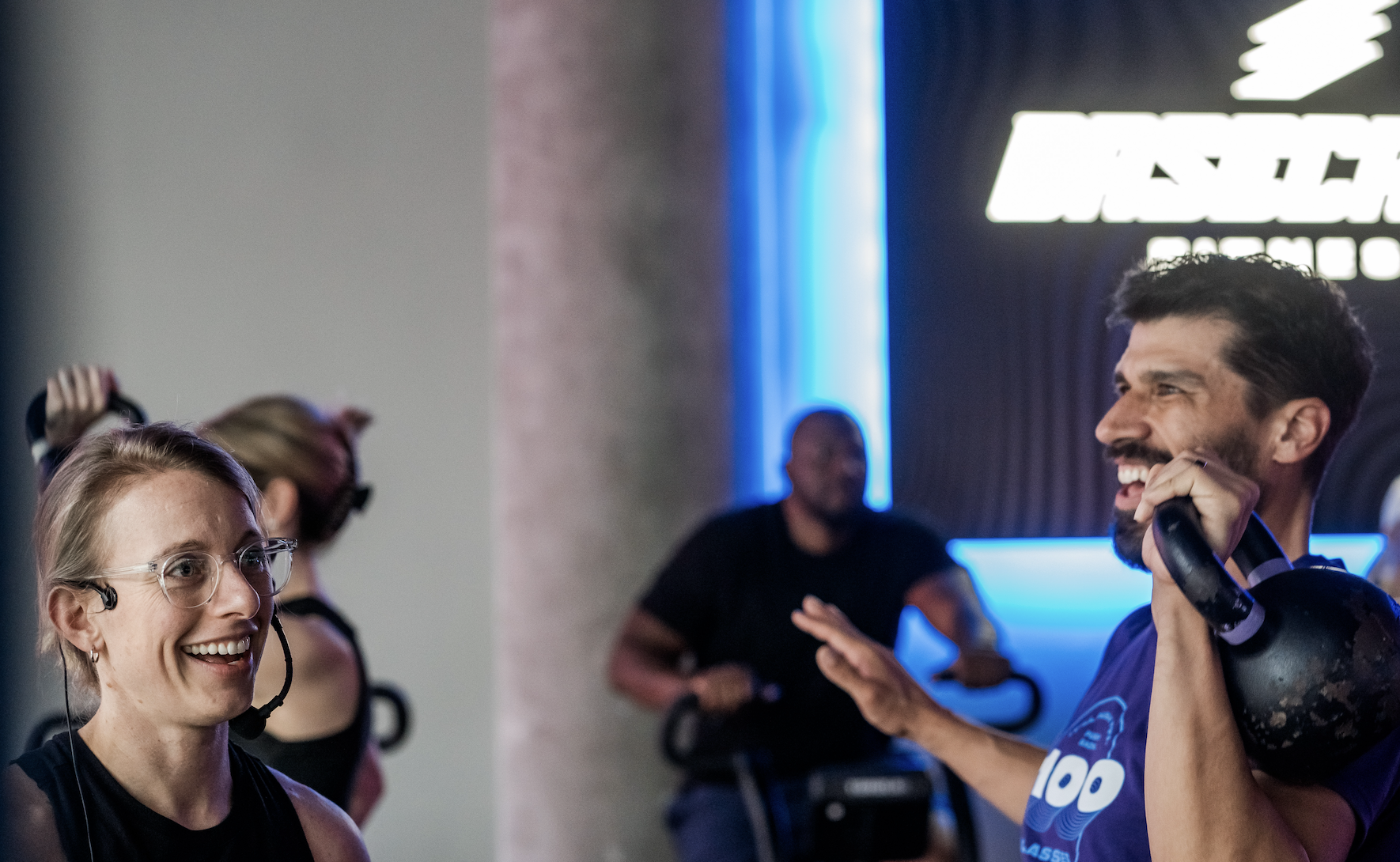
Strength training does more than build muscle. Learn how getting stronger can improve stability, balance, coordination, bone health and everyday movement while helping you build a stronger foundation for long-term health and longevity.

6 minutes
When most people think about the benefits of strength training, they probably picture building muscle, lifting heavier weights or changing the way their body looks.
However, some of the most valuable benefits of strength training have nothing to do with what you see in the mirror.
Strength training can help you move with more stability. Maintain better balance. Improve coordination. Support stronger bones. Make everyday tasks easier. And help you build a body that's capable of keeping up with your life for years to come.
In other words, strength isn't just about looking stronger. It's about living stronger.
Think about how often your body has to stabilize itself throughout a normal day.
- You step off a curb.
- Carry a bag in one hand.
- Pick something up from the floor.
- Reach overhead.
- Walk on uneven ground.
Before you can move effectively, your body has to create stability.
Strength training challenges the muscles responsible for controlling your joints and maintaining your position as you move. Exercises like squats, lunges, rows, presses, carries and unilateral movements require your muscles and core to work together to keep your body controlled.
That makes stability an important part of functional strength training - which is strength you can actually use outside the gym.
And it's one reason getting stronger can translate into feeling more confident during everyday movement.
Balance isn't only something you need to work on later in life. You use it every day.
Walking up stairs, stepping over something on the floor, playing with your kids, hiking, running and participating in sports all require your body to control its position as you move.
Your legs, hips and core play a major role in that process. Building strength in those areas can give your body a stronger foundation for maintaining balance and controlling movement.
Exercises performed on one side of the body at a time — like lunges, split squats, single-arm presses or loaded carries — can add another challenge by forcing your body to stabilize while producing force.
The CDC specifically recommends muscle-strengthening and balance activities as part of a well-rounded fitness routine, particularly as we age.
Strength today can help create confidence in movement tomorrow.
Getting stronger isn't just about teaching individual muscles to produce more force.
You're also teaching different parts of your body to work together.
Consider a squat-to-press, deadlift, lunge, kettlebell movement or loaded carry. Multiple joints and muscle groups have to move in the right sequence while your core stabilizes your body.
That's coordination.
The more consistently you practice different movement patterns, the better your body can become at controlling those movements.
At Basecamp Fitness, this is one reason we incorporate a variety of strength exercises and movement patterns rather than performing the same handful of exercises every day.
The goal isn't just to build strong muscles. It's to build a body that knows how to use them.
Muscles aren't the only part of your body that responds to resistance. Your bones do too.
Resistance training places controlled stress on your musculoskeletal system. Over time, appropriately programmed resistance and weight-bearing exercise can help support bone strength and bone mineral density.
That's especially important because maintaining muscle and bone health becomes increasingly important as we age.
Strong muscles can also support the activities that keep us active, like walking, climbing stairs, carrying things, exercising, traveling and participating in the things we enjoy.
So while building muscle may be one visible result of strength training, what's happening underneath the surface matters just as much.
One of the best measurements of strength isn't necessarily how much weight is written on the dumbbell. It's what you're able to do outside the gym.
- Carrying groceries.
- Lifting a suitcase.
- Getting up from the floor.
- Moving furniture.
- Climbing stairs.
- Picking up your kids.
- Going for a hike.
- Playing a recreational sport.
Those are all physical tasks, but they all require some combination of strength, stability, mobility and coordination. Functional strength training prepares your body for those moments.
The stronger and more capable you become, the more physical capacity you have available when everyday life asks for it.
Your fitness goals today don't have to be solely about what happens over the next six weeks or six months. They can also be about what you want your life to look like decades from now.
Regular physical activity helps maintain muscle, bone health and physical function as we age. Research has also linked muscle-strengthening activity with positive long-term health outcomes.
That's why strength training for longevity isn't necessarily about trying to stay young.
It's about maintaining your ability to keep doing the things you love, like traveling, moving independently, staying active, and saying yes when life gives you an opportunity to use your body.
Building and maintaining strength gives you more physical capacity to work with now, and later in life.
There's nothing wrong with wanting your workouts to change how you look, but your progress and the benefits don't have to stop there.
Every time you build strength, you're also building something that can influence how you move through the rest of your life. Giving you more stability, balance, coordination, physical confidence, and overall a stronger foundation for the years ahead.
That's why at Basecamp Fitness, strength training isn't an occasional addition to the workout. It's part of the foundation.
Our coach-led 35-minute strength and cardio workouts alternate dedicated strength exercises with high-energy cardio intervals, giving you opportunities to build muscular strength and cardiovascular endurance in the same efficient workout.
Because the goal isn't simply to become better at working out.
It's to build a stronger body for everything you want to do outside of it.
Strength training can support better balance by strengthening muscles in the legs, hips and core that help control your body's position. Combining resistance training with exercises that specifically challenge balance can provide an even more well-rounded approach.
Strength training can play an important role in healthy aging by helping preserve muscle strength and physical function. Regular physical activity is also associated with numerous long-term health benefits, making strength training an important component of a well-rounded fitness routine.
Strength exercises that involve multiple joints and muscle groups require different areas of the body to work together. Practicing movements like squats, lunges, presses, rows and carries can challenge both muscular strength and movement coordination.
Current physical activity guidelines recommend adults perform muscle-strengthening activities involving all major muscle groups at least two days per week. Your ideal training frequency can vary based on your fitness level, goals, workout intensity and recovery.
Basecamp Fitness combines strength training and high-intensity cardio in one 35-minute coach-led workout. Members alternate between cardio intervals on the air bike and dedicated strength exercises on the floor, followed by additional core and recovery work.
You don't have to wait until strength becomes something you need.
Start building it now.
Find a Basecamp Fitness studio near you and experience a 35-minute strength and cardio workout designed to help you get stronger, move better and make the most of the time you have.
Get in. Get after it. Get on with your life.

Strength isn’t just about what you see in the mirror. From better balance and stability to improved coordination and healthy aging, discover how strength training can help you move better and stay capable for years to come.
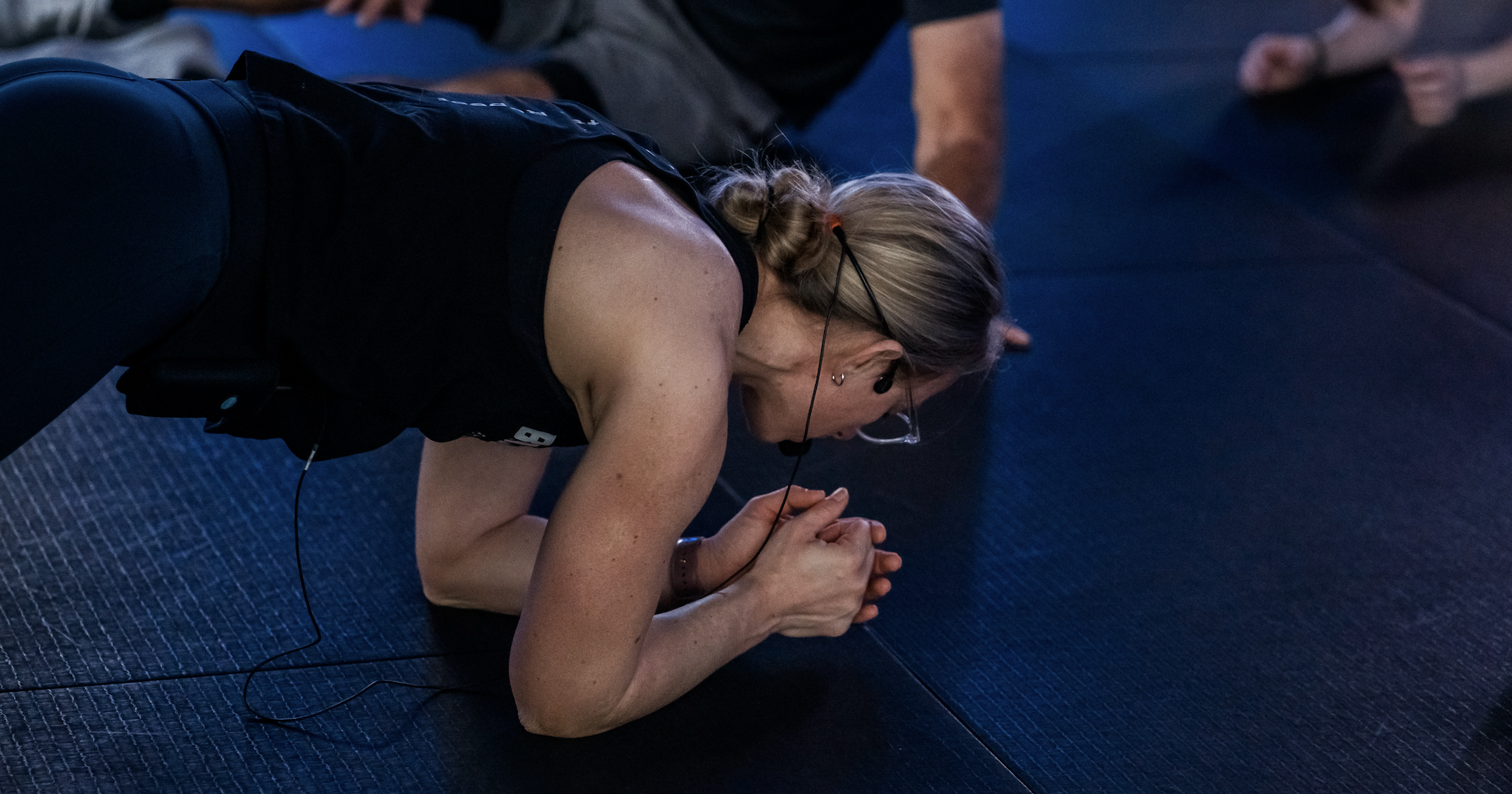
A strong core supports nearly every movement you make, from lifting weights to everyday activities. In this blog, we break down why core strength is so important, how it supports strength training, and how Basecamp Fitness works the core throughout class—with dedicated Core & Stretch time built in at the end of every workout.

Strength training is not just for experienced athletes. Learn how Basecamp makes strength-focused fitness approachable for beginners, returning exercisers, and seasoned athletes through scalable movements, expert coaching, and intentional programming.

